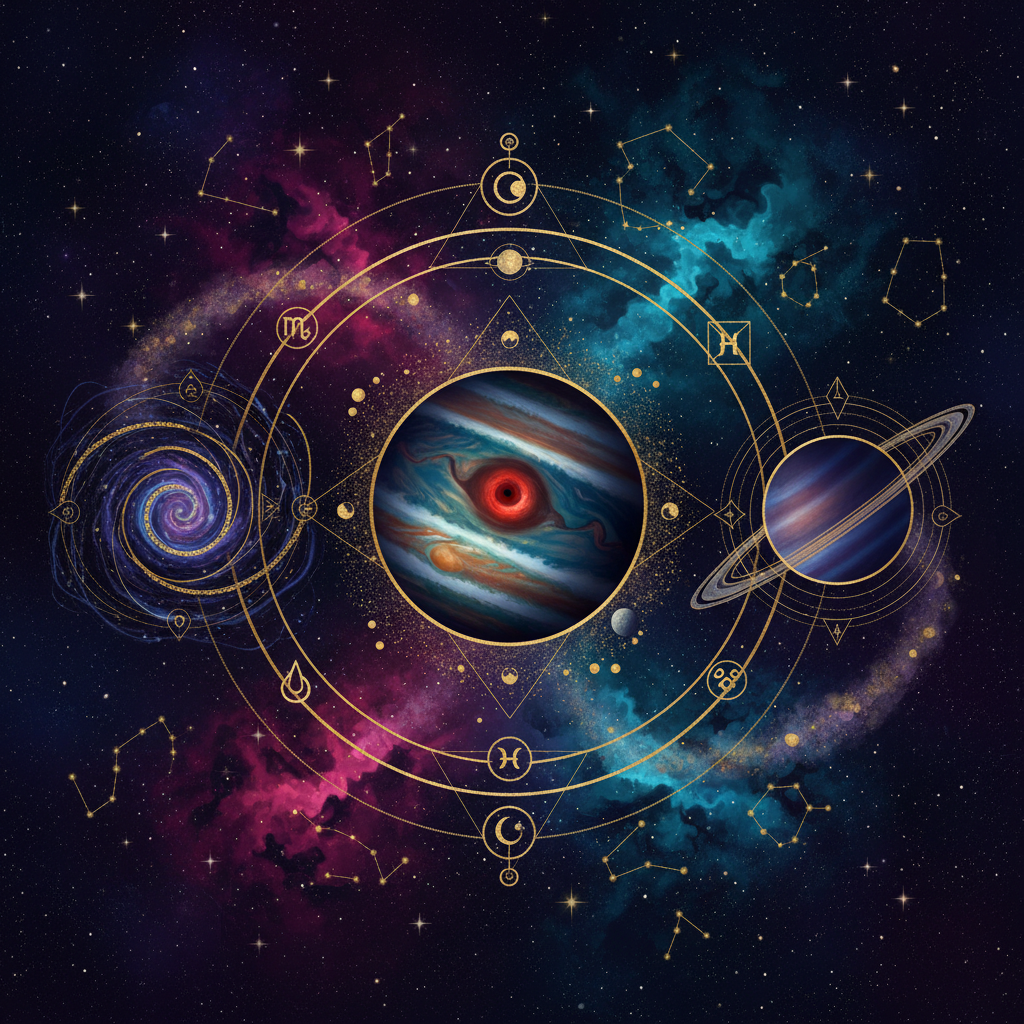
Introduction to Planetary Retrogrades
In astrology, the concept of retrogrades is both fascinating and deeply influential. When a planet appears to move backward through the zodiac, it prompts us to pause, reflect, and reassess various aspects of our lives. The retrogrades of Mercury, Jupiter, and Saturn—three major players in astrology—carry unique themes and lessons that can aid our personal growth and understanding. In this post, we’ll explore the meaning of these retrogrades, their signs, and their timing.
What Are Retrogrades?
A retrograde occurs when a planet appears to move in reverse relative to Earth’s orbit. This phenomenon is an optical illusion caused by the different speeds of planetary orbits. While retrogrades can feel disruptive, they are opportunities for introspection and reevaluation.
- Mercury Retrograde: Affects communication, technology, and travel.
- Jupiter Retrograde: Encourages introspection on beliefs, growth, and expansion.
- Saturn Retrograde: Focuses on discipline, responsibility, and long-term goals.
Mercury Retrograde: Communication and Reflection
Mercury retrograde occurs three to four times a year and lasts about three weeks each time. During this period, we often experience miscommunications, delays, and misunderstandings.
- Signs of Mercury Retrograde: Trouble with technology, missed appointments, and heightened misunderstandings in conversations.
- Timing: In 2026, expect Mercury retrogrades in January, May, and September. Use this time for reflection rather than launching new projects.
Jupiter Retrograde: Growth and Introspection
Jupiter, the planet of expansion and abundance, goes retrograde approximately once a year for about four months. This period is ideal for revisiting past beliefs and assessing our personal growth.
- Signs of Jupiter Retrograde: Feeling stuck in growth, questioning beliefs, and reevaluating goals.
- Timing: In 2026, Jupiter’s retrograde starts in April, providing a chance to reflect on your personal and spiritual journeys.
Saturn Retrograde: Discipline and Accountability
Saturn represents structure, discipline, and responsibility. Its retrograde typically occurs for about four to five months each year, encouraging us to review our commitments and boundaries.
- Signs of Saturn Retrograde: Feeling overwhelmed by responsibilities, rethinking long-term goals, and reassessing personal limits.
- Timing: Look out for Saturn’s retrograde in May 2026, a useful period for refining your ambitions and evaluating what truly serves you.
How to Navigate Retrogrades
While retrograde periods can seem daunting, they offer valuable lessons if approached with the right mindset. Here are some strategies to help you navigate these astrological events:
- Reflect: Use this time to reflect on your past decisions and experiences. Journaling can be particularly effective.
- Reassess: Evaluate your goals and priorities. Are they still aligned with your true self?
- Revisit: Reconnect with old friends or past projects that may need closure or a fresh perspective.
- Stay Flexible: Expect delays and misunderstandings. Patience is key during these times.
Conclusion: Embracing the Lessons of Retrogrades
Planetary retrogrades, particularly those of Mercury, Jupiter, and Saturn, offer profound opportunities for growth through reflection and reconsideration. By understanding the unique themes associated with each retrograde, we can navigate these periods with greater awareness and intention. Embrace these cosmic pauses as chances to align with your true self, reevaluate your paths, and emerge stronger and more focused when they conclude.