What is Synastry Astrology?
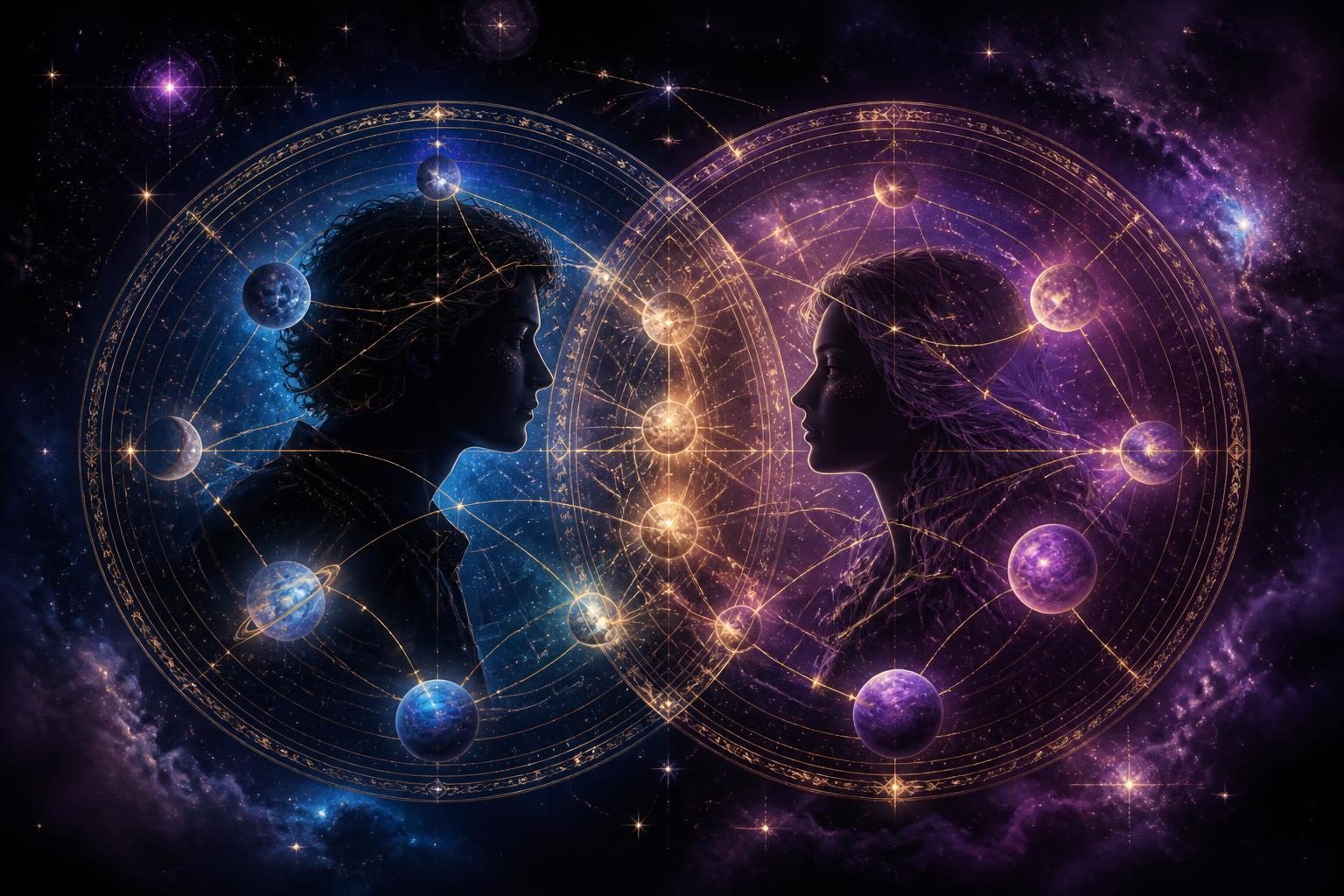
Synastry, a fascinating branch of astrology, offers a unique lens through which to view the intricate tapestry of human connection. It's not about predicting fate or assigning a 'good' or 'bad' label to a relationship. Instead, synastry compares two individual birth charts, overlaying them to see how specific planetary placements and aspects interact. This comparison illuminates the unique energies each person brings into the connection, what they tend to draw out in each other, and the recurring themes or 'charges' that emerge within the relationship dynamic.
Think of your birth chart as a snapshot of the cosmos at the exact moment you were born. It contains the positions of the planets, the Sun, and the Moon, all set against the backdrop of the zodiac signs and houses. When you engage in synastry, you're essentially taking two of these cosmic snapshots and placing them side-by-side. The magic happens when you examine how the planets in one chart 'speak' to the planets in the other. These conversations, expressed through astrological aspects, reveal the hidden currents that flow between two souls.
The Sun and Moon: Core Compatibility
While Sun sign compatibility is a common starting point, it's just the tip of the iceberg. The Sun represents our core identity, our ego, and our vital life force. The Moon, on the other hand, governs our emotional world, our instincts, our needs for security, and how we nurture ourselves and others. When these luminaries connect in synastry, they speak volumes about fundamental compatibility.
Sun-Moon aspects are incredibly significant. A harmonious aspect (conjunction, trine, sextile) between your Sun and your partner's Moon can indicate a deep emotional understanding and a sense of being 'seen' and accepted on a profound level. For example, if your Moon is in Aries and their Sun is in Leo, there’s a fiery, confident exchange that can be energizing. Conversely, challenging aspects (square, opposition) can point to emotional differences that require conscious effort to bridge. It doesn't mean the relationship is doomed, but rather that navigating emotional needs might involve more negotiation and compromise.
Venus and Mars: The Dance of Attraction and Desire
Perhaps the most talked-about planetary pairing in synastry is Venus and Mars. Venus embodies what we value, our sense of beauty, pleasure, and how we express affection and love. Mars, the fiery planet, represents our drive, our passion, our assertiveness, and our physical energy. The aspects between your Venus and your partner's Mars are crucial for understanding attraction and the initiation of action within the relationship.
Venus-Mars aspects are often considered indicators of chemistry. A Venus-Mars conjunction, for instance, can create an intense, magnetic pull, where desire and affection are easily expressed and reciprocated. Trines and sextiles between these planets suggest a natural flow of attraction and a harmonious interplay of giving and receiving affection. Squares and oppositions, while potentially more challenging, can signify a potent, sometimes volatile, attraction where desires might clash, leading to tension but also undeniable passion. It’s the spark that ignites the relationship, but also the energy that fuels disagreements if not managed consciously.
Mercury and the Mind: Communication Styles
Effective communication is the bedrock of any lasting relationship, and Mercury plays a starring role in synastry when it comes to understanding how you and your partner exchange information. Mercury rules our thoughts, our speech, our intellect, and our ability to process and share ideas. The aspects involving Mercury reveal how your minds connect and how you typically communicate with each other.
Mercury aspects are vital for intellectual compatibility. If your Mercury forms a harmonious aspect with your partner's Mercury, you'll likely find it easy to understand each other's thought processes and engage in stimulating conversations. For example, two people with Mercury in air signs (Gemini, Libra, Aquarius) often share a similar intellectual wavelength. If your Mercury aspects your partner's Sun or Moon, it indicates that your ideas and communication style deeply resonate with their core identity or emotional needs, fostering clarity and mutual understanding. Challenging Mercury aspects might suggest differences in communication styles, where one person might feel their words are misunderstood or that their partner isn't 'getting' them. This highlights the importance of mindful listening and adapting your communication approach.
Saturn and the Foundation: Commitment and Structure
While often perceived as the 'taskmaster' of the zodiac, Saturn's influence in synastry is profound, especially when it comes to building lasting structures and commitment. Saturn represents responsibility, discipline, boundaries, challenges, and the lessons we need to learn. Aspects involving Saturn can reveal the potential for seriousness, longevity, and the structure of the relationship.
Saturn aspects, particularly when Saturn in one chart aspects the personal planets (Sun, Moon, Mercury, Venus, Mars) in the other, can bring a sense of gravity and long-term potential. For instance, your Saturn conjunct your partner's Sun can indicate that you feel a sense of responsibility towards them, or that they help you mature and take life more seriously. Their Saturn conjunct your Moon might bring a feeling of emotional security and stability, as if a protective, grounding presence is there. However, Saturn's challenging aspects can also manifest as feelings of restriction, burden, or a sense of uphill struggle within the relationship. These challenges, though, often serve as opportunities for growth and building resilience, teaching valuable lessons about commitment and perseverance.
The Bigger Picture: Beyond Individual Aspects
It's crucial to remember that synastry is not about isolated aspects; it's about the intricate interplay of all the planetary connections. A relationship isn't defined by a single challenging aspect but by the overall pattern that emerges when two charts are woven together. The strength of the harmonious connections, the willingness of both individuals to work with the challenging energies, and their shared life goals all contribute to the success and depth of a relationship.
Synastry provides a rich map of potential dynamics. It highlights where you naturally complement each other, where you might experience friction, and where you have the opportunity to grow together. By understanding these cosmic conversations, you gain invaluable insights into yourselves and your partner, empowering you to navigate your connection with greater awareness, empathy, and intention. Ultimately, compatibility is a dynamic process, a willingness to dance with the celestial energies that bring you together.