The Art of Tarot Spreads: More Than Just Cards
Tarot. The word itself conjures images of mystery, ancient wisdom, and profound insights. But how do we go from a shuffled deck of beautifully illustrated cards to clear, actionable guidance? The answer lies in the tarot spread. Think of a spread not just as a pattern on a table, but as a visual narrative, a map that guides you through the landscape of your question and the wisdom of the cards.
For beginners, the concept of a spread can seem intimidating. You might wonder if there are strict rules or if you need to memorize dozens of layouts. The truth is, while many traditional spreads exist, the most powerful spreads are those that resonate with your intuition and directly address the situation at hand. This guide will demystify tarot spreads, offering a clear path to understanding their meaning and how they empower your readings.
What is a Tarot Spread?
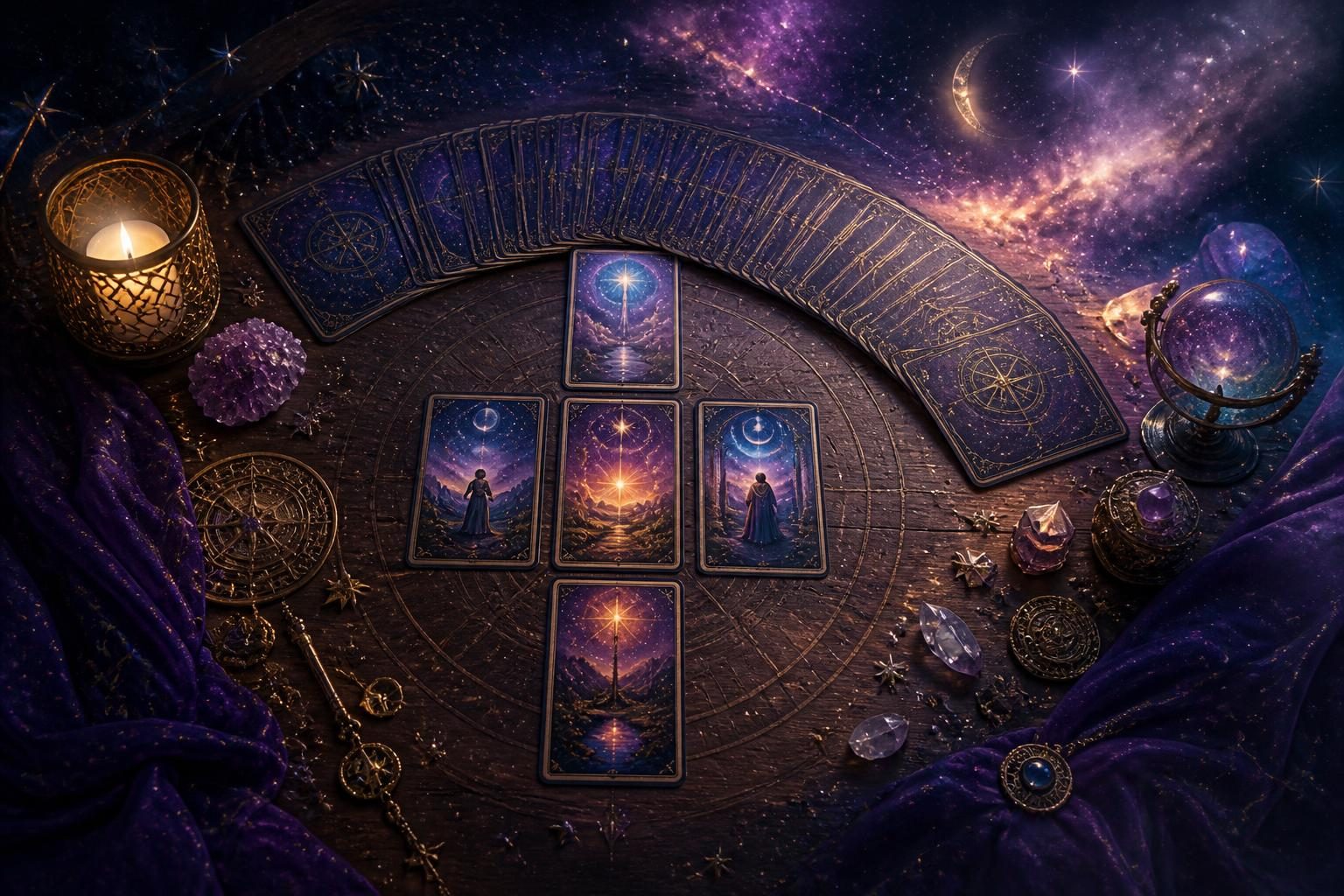
At its core, a tarot spread is a specific arrangement or pattern of tarot cards laid out after shuffling. This arrangement is not arbitrary; each position within the spread is assigned a particular meaning or question. As Source 3 mentions, “In a reading, the cards are shuffled while a question is held in mind, a few are drawn and laid out in a pattern called a spread, and the reader interprets what the images say about the situation, both individually and in combination.” This collaborative dance between the cards and their positions is where the magic truly happens.
The spread provides context for each individual card. A card that might signify a challenge in one position could represent a hidden strength in another. By understanding the role of each position, you can interpret the cards not in isolation, but as interconnected pieces of a larger story. This is what elevates a tarot reading from a simple glimpse of symbols to a nuanced exploration of a situation.
The Foundation: Why Spreads Matter
Why bother with spreads at all? Couldn't you just pull a card and get an answer? While single-card pulls are excellent for daily inspiration or quick checks, spreads offer a more comprehensive understanding. They allow for:
- Depth and Nuance: Spreads explore multiple facets of a question, revealing underlying influences, potential obstacles, future possibilities, and advice.
- Structure for Complex Questions: When you have a complex situation, a simple one-card pull might feel insufficient. A spread can break down the issue into manageable parts.
- Storytelling: Tarot is a form of narrative. Spreads help weave the individual card meanings into a cohesive story that speaks directly to your query.
- Guidance and Action: Many spreads are designed to offer concrete advice or suggest a course of action, empowering you to make informed decisions.
As Source 4 notes, “How to Read Tarot Cards A reading begins when the person seeking guidance focuses on a specific question or concern. The deck is shuffled, and several cards are placed in a particular pattern or spread, depending on the nature of the reading.” The spread, therefore, is tailored to the nature of the reading itself.
Popular Tarot Spreads for Beginners
Starting with a few foundational spreads can build your confidence and understanding. Here are some essential ones:
The One-Card Pull
This is the simplest spread and a fantastic starting point. It's perfect for daily insights, quick questions, or getting a general vibe. Simply ask a question, shuffle, and draw one card. The meaning of that single card is your answer or focus for the day.
The Three-Card Spread
A staple for a reason, the three-card spread offers more depth than a single pull. Its most common interpretation is:
- Card 1: Past/Foundation: What led to this situation?
- Card 2: Present/The Situation: What is happening now?
- Card 3: Future/Outcome: Where is this heading, or what is the potential outcome?
This spread is versatile and can be adapted. For instance, it could also be interpreted as: Situation, Action, Outcome, or Mind, Body, Spirit.
The Celtic Cross Spread
While seemingly complex, the Celtic Cross is incredibly insightful and one of the most well-known spreads. It offers a comprehensive overview of a situation. Its positions typically cover:
- Card 1: The Present Situation: The heart of the matter.
- Card 2: The Obstacle: What is blocking you or the situation.
- Card 3: The Foundation: The roots of the issue (past or underlying influences).
- Card 4: The Recent Past: What has just passed that is relevant.
- Card 5: The Potential Outcome/Goal: What you are striving for or the likely result if things continue as they are.
- Card 6: The Near Future: What is coming up soon.
- Card 7: Your Role: Your attitude or approach to the situation.
- Card 8: External Influences: How others see the situation, or external factors at play.
- Card 9: Hopes and Fears: Your inner feelings about the situation.
- Card 10: The Final Outcome: The ultimate resolution or conclusion.
Don't let the number of cards deter you. Each position offers a specific lens through which to view your question, and the combination tells a rich story.
Oracle Decks and Their Unique Spreads
While tarot decks have a structured system of Major and Minor Arcana, oracle decks are often more varied. They can feature any theme imaginable – nature, goddesses, animals, affirmations – and their card meanings are typically more open to interpretation. Oracle decks often come with their own suggested spreads, or you can create your own based on the deck's theme and your question.
The beauty of oracle decks lies in their intuitive nature. The images and words on oracle cards often act as direct prompts for your intuition. When using oracle spreads, focus on the overall message and the feelings evoked by the cards. They are less about intricate interpretation and more about direct, often empowering, messages.
How to Choose and Use a Spread
The best spread for you is one that feels right for your question. Here’s how to approach it:
- Understand Your Question: Is it a simple yes/no? A look at a relationship? A career dilemma? The complexity of your question will guide your choice of spread.
- Start Simple: Don't jump into the most complex spread immediately. Master the one-card and three-card spreads first.
- Research Spreads: Look up common spreads online or in tarot books. See which ones resonate with you.
- Create Your Own: As you gain experience, you’ll find yourself adapting existing spreads or creating entirely new ones that perfectly suit a specific query. For example, if you're asking about a creative project, you might create a spread with positions like: Inspiration, Process, Challenges, and Final Expression.
- Intuition is Key: Always trust your gut. If a card's meaning in a particular position feels off, explore why. Your intuition is your most powerful tool in interpreting any spread.
Conclusion: Your Personal Tarot Compass
Tarot spreads are not rigid formulas but flexible frameworks that empower your journey of self-discovery. They provide structure, context, and a narrative flow that transforms individual card meanings into profound insights. By understanding the purpose of each position and trusting your intuition, you can harness the power of spreads to gain clarity, make decisions, and navigate life's many paths with greater confidence.
Whether you're using a traditional tarot deck or an intuitive oracle, the principles of thoughtful spread placement and interpretation remain the same. So, shuffle your deck, focus your intention, lay out your cards, and let the story unfold. Your personal tarot compass is ready to guide you.